
How Police Test for Marijuana in Illinois DUI Stops
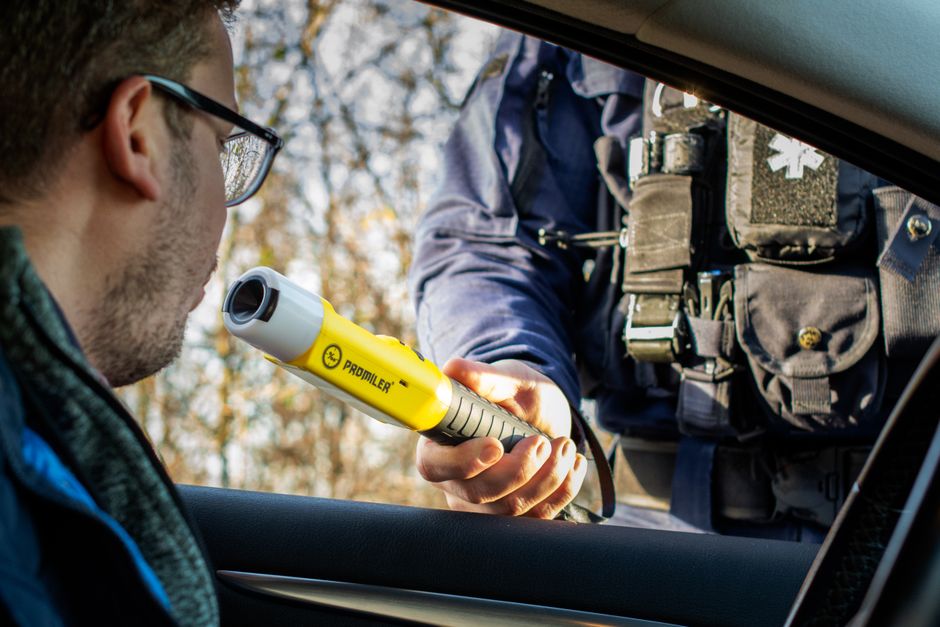
Every Chicago driver stopped on suspicion of a cannabis DUI runs into the same practical question: how do police test for marijuana in Illinois, and how reliable is any of it? The answer is a layered sequence of roadside observation, standardized field sobriety testing, statutorily-authorized oral fluid tools, and post-arrest laboratory analysis of blood or urine. Each layer has its own scientific footing, its own procedural rules, and its own attack surface for a defense.
The Standardized Field Sobriety Battery: What It Actually Measures
Horizontal Gaze Nystagmus (HGN)
The HGN test asks the driver to follow a stimulus (usually a pen light or fingertip) with their eyes only. The officer looks for involuntary jerking at maximum deviation, lack of smooth pursuit, and onset of jerking before 45 degrees. HGN is a scientifically validated indicator of alcohol and central nervous system depressant impairment. Its validity for cannabis is contested. The National Highway Traffic Safety Administration research on which the standardized battery was developed did not establish HGN as a specific marijuana indicator. A driver who passes HGN cleanly gives the defense a useful data point.
Walk and Turn
The walk and turn measures divided attention: the driver takes nine heel-to-toe steps along a real or imaginary line, turns per a specific instruction, then walks nine heel-to-toe steps back. Officers score eight standardized clues, including starting too soon, losing balance during instructions, stepping off line, missing heel-to-toe, and improper turn. The test was calibrated on alcohol impairment. Physical conditions (footwear, back injuries, uneven pavement common on Chicago side streets, ambient lighting) introduce noise that has nothing to do with cannabis use.
One-Leg Stand
The driver stands on one leg, foot elevated approximately 6 inches off the ground, counts out loud in a specific format, for 30 seconds. Officers score four clues: swaying, using arms for balance, hopping, and putting the foot down. Weight, age, inner-ear condition, and injuries all affect performance. The one-leg stand's specificity for cannabis impairment is thin. A driver who has never smoked in their life but weighs 280 pounds may fail it on physiology alone.
Roadside Oral Fluid Testing Under (625 ILCS 5/11-501.2(a-5))
Illinois law authorizes preliminary oral fluid testing of drivers suspected of cannabis DUI. The statute contemplates a swab of the driver's saliva, analyzed by an authorized device, to detect the presence of THC. The authority is on the books. Standardized statewide deployment across Chicago Police, Cook County Sheriff, and Illinois State Police patrol has not matured to routine practice. When a device is used, the defense should probe the specific model, its Illinois State Police certification status, the officer's training on that model, calibration and quality-control records, and the chain of custody on the swab. A positive oral fluid preliminary result does not, on its own, establish per se impairment; it feeds probable cause for arrest and post-arrest evidentiary testing.
Post-Arrest Chemical Testing Under (625 ILCS 5/11-501.2)
Whole-Blood Draw
The evidentiary standard for cannabis DUI in Illinois. Blood is drawn by a physician, registered nurse, licensed practical nurse, other qualified personnel, or a certified phlebotomist at a hospital, jail infirmary, or ISP-approved site. The vial is sealed, labeled, logged, and delivered under chain-of-custody protocol to a certified forensic laboratory. Analysis is by gas chromatography-mass spectrometry (GC-MS) or liquid chromatography-mass spectrometry (LC-MS/MS). The per se whole-blood threshold is 5 nanograms of delta-9 THC per milliliter. Delta-9, not carboxy-THC. Analysts who report the wrong metabolite give defense counsel a foundation attack.
Urine Testing
Urine has a per se threshold of 10 nanograms per milliliter under (625 ILCS 5/11-501.2). The problem with urine is well-known to the toxicology community: it detects metabolites that persist for days or weeks after impairment has cleared. A regular cannabis user who has not consumed for 72 hours can still produce a positive urine screen. This creates real litigation leverage in cases where the officer's impairment observations are marginal.
Blood Draw Timing
Time from stop to draw matters. THC blood levels decline steeply in the first 30 to 90 minutes after inhalation. A blood draw two hours after the traffic stop measures a different concentration than the driver had at the moment of the stop. The defense can argue that any post-arrest number does not reliably back-calculate to the driving moment.
Medical Cardholder Testing
A registered Illinois medical cannabis patient is exempt from the per se prong. Testing still happens: the officer will still request blood or urine, and refusing triggers Statutory Summary Suspension consequences under (625 ILCS 5/11-501.1). What changes is what the state can do with the number. Above 5 ng/mL alone does not build the conviction. The state has to run the impairment case using officer observation, field sobriety performance, driving pattern, and any admissions. Consulting a Chicago cannabis DUI lawyer before speaking with detectives is the practical move for any cardholder.
Drug Recognition Evaluator (DRE) Protocol
Some Chicago-area arrests include a DRE evaluation. The DRE runs a 12-step examination: breath alcohol test, interview of the arresting officer, preliminary examination and first pulse, eye examinations (HGN, VGN, lack of convergence), divided attention psychophysical tests, vital signs and second pulse, dark room examinations (pupil size under different lighting), examination of muscle tone, examination of injection sites and third pulse, subject's statements and other observations, analysis and opinions, and toxicological examination. DRE opinions are subject to challenge under Illinois evidentiary rules. The reliability floor for cannabis-only DRE conclusions is a live litigation issue.
What a Chicago Driver Should Know Before the Stop
Field sobriety tests are voluntary under Illinois law. There is no statutory penalty for declining them. The consequences differ from post-arrest chemical testing, which is not voluntary in the same sense: refusing after a lawful arrest triggers Statutory Summary Suspension for 12 months on a first offense, 3 years on a repeat. Declining roadside field sobriety and requesting counsel is legally permitted. Most drivers do not know this at the moment it matters most.
Frequently Asked Questions
Do Chicago police currently use roadside saliva swabs for cannabis?
The authority under (625 ILCS 5/11-501.2(a-5)) exists but statewide standardized deployment has not matured. Traffic stops in Cook County still center on the field sobriety battery and post-arrest blood or urine testing.
Can a driver refuse the walk-and-turn without a Statutory Summary Suspension?
Field sobriety tests before arrest are voluntary and refusal alone does not trigger the Statutory Summary Suspension. The suspension attaches to refusal of post-arrest chemical testing (blood, breath, urine) under (625 ILCS 5/11-501.1).
Which cannabis metabolite matters for the per se prong?
Delta-9 tetrahydrocannabinol in whole blood, at 5 nanograms per milliliter or greater. Carboxy-THC (the inactive metabolite) does not satisfy the per se threshold, though it commonly appears in urine analysis at the 10 ng/mL other-bodily-substance limit.
What are the strongest attack points on marijuana test evidence?
Chain of custody breaks between draw and lab, laboratory calibration and QC records, analyst certification, delta-9 versus carboxy-THC identification, timing gap between stop and draw, and foundation for any oral fluid device used at the roadside.
Related Pages
- Chicago Cannabis DUI Lawyer
- Field Sobriety Testing
- Blood Evidence in DUI
- Breathalyzer Testing
- DUI Defense Strategies
- Illinois DUI License Suspension