
How to Get Your License Back After a DUI in Illinois: 9-Step Guide
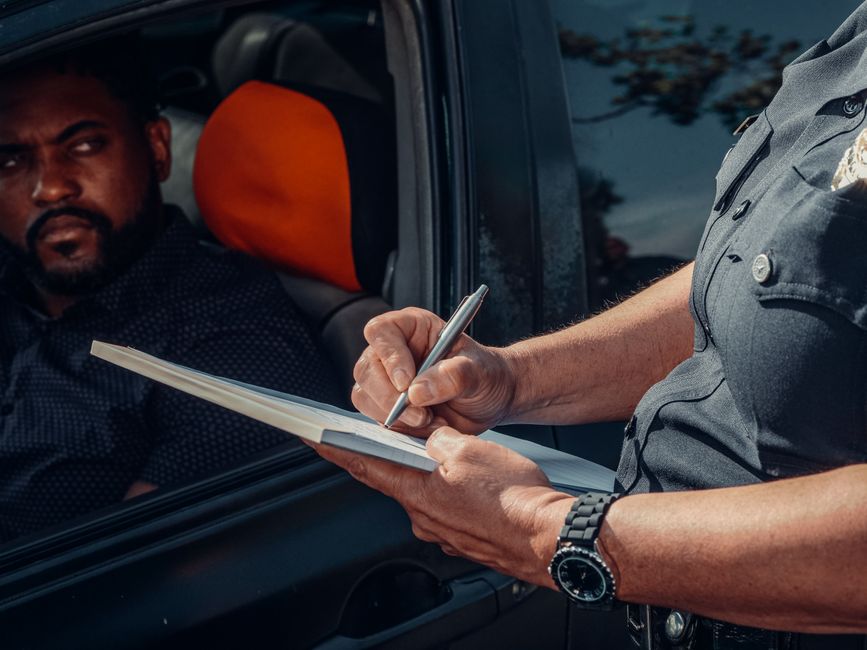
Reinstatement in Illinois is not a form. It is a workflow. To get a license back after a DUI in Illinois, a driver must run every step in the right order, with the right paperwork, at the right facility. Skip a step and the Secretary of State bounces the application. This is the exact sequence a Cook County driver follows, from the day the suspension or revocation was imposed to the day a new license card lands in the mail.
Step 1: Identify Whether the Action Is a Suspension or a Revocation
Every step that follows depends on this classification. A driver whose Statutory Summary Suspension expired last month has a very different path than a driver whose license was revoked after a criminal DUI conviction. Pull the current Illinois driving abstract from the Secretary of State (available in person at any facility or online through Illinois Secretary of State services). The abstract will show one of two entries:
- Suspension under (625 ILCS 5/11-501.1) with a definite end date.
- Revocation under (625 ILCS 5/6-205) with an "eligibility date" but no automatic reinstatement.
A suspension follows the fast track (Steps 6, 8, 9 only). A revocation runs the full nine steps.
Step 2: Schedule and Complete the Alcohol and Drug Evaluation
Every reinstatement candidate needs a current Uniform Report of Alcohol/Drug Evaluation. The evaluation must be conducted by a provider licensed by the Illinois Division of Substance Use Prevention and Recovery. Not a therapist. Not a general counselor. A DUI-specific licensed evaluator.
The evaluator assigns a classification:
- Minimal Risk: 10 hours of DUI Risk Education, no treatment.
- Moderate Risk: 10 hours education plus 12 hours early intervention.
- Significant Risk: education plus 20 hours treatment plus continuing care.
- High Risk: education plus 75 hours treatment plus continuing care plus support meetings.
The evaluation must be dated within six months of the reinstatement hearing. Old evaluations get rejected. This is why Step 2 comes early. Not first.
Step 3: Complete DUI Risk Education
All classifications require the 10-hour DUI Risk Education course through a licensed Illinois provider. Course completion generates a Certificate of Completion that goes into the hearing packet. Cook County providers run these courses in-person and online. Enroll immediately after the evaluation.
Step 4: Complete Any Required Treatment
Moderate Risk and higher classifications trigger treatment hours. Treatment providers must also be licensed by the Illinois Division of Substance Use Prevention and Recovery. Discharge summary and continuing care plan are both required documents at the hearing. High Risk drivers additionally need documented participation in a support group such as AA and a support system letter.
Step 5: Assemble Three Witness Letters
The Secretary of State hearing officer wants corroboration that sobriety is real. Three letters from people who know the driver's daily life (employer, spouse, family member, sponsor, treatment provider) attest that the driver has abstained. Letters must be recent, notarized, and specific. Generic character letters get discounted.
Step 6: File the SR-22
SR-22 is a certificate an Illinois-licensed insurer files electronically with the Secretary of State proving the driver carries the state-minimum liability coverage. Not all insurers offer SR-22. Progressive and a small handful of specialty carriers usually do. The SR-22 must be filed before the hearing, not after, and must remain active for three years from reinstatement. Any lapse triggers automatic re-suspension.
Step 7: Request the Formal Administrative Hearing
Revocation reinstatement requires a formal hearing at a Secretary of State Administrative Hearings office. Chicago-area drivers use the Loop office. The hearing request form (DSD X 195) plus a $50 filing fee books the hearing. Informal hearings (walk-in) are available only for Minimal Risk first-offense revocations. Everyone else gets a formal hearing.
Step 8: Attend the Hearing With the Complete Packet
The driver appears before a Secretary of State hearing officer. On the table: current evaluation, education certificate, treatment discharge summary, continuing care plan, three witness letters, SR-22 confirmation, hearing fee receipt, and any prior court dispositions. The officer questions the driver directly about:
- The circumstances of the DUI arrest.
- Every drink or drug used since the arrest.
- Understanding of the risk classification.
- Support system in place.
- Plan to avoid future incidents.
Answers must be consistent with the evaluation. A driver who told the evaluator abstinence started two years ago and tells the hearing officer they had a beer last month gets denied on credibility alone. Preparation with a Chicago DUI lawyer is the difference between approval and denial. Denial rates on unrepresented first hearings run high.
Step 9: Pay Fees, Pass Exam, Receive License
If the hearing officer approves reinstatement, the final steps are:
- Pay the $500 reinstatement fee at any Illinois Secretary of State facility (Driver Services).
- Pass the full driver's license exam: written, vision, and road test. The written test uses the current Illinois Rules of the Road handbook.
- Install a BAIID if the reinstatement is with a Restricted Driving Permit (RDP), or if the hearing officer orders BAIID as a condition of full reinstatement.
- Receive the new license card by mail within 15 business days.
The Fast-Track Version for Suspension-Only Cases
A driver whose only license action was a Statutory Summary Suspension (no criminal conviction) runs a much shorter version:
- Wait for the suspension period to expire.
- Confirm SR-22 is on file.
- Walk into any Secretary of State facility.
- Pay the $250 first-offense reinstatement fee (or $500 for subsequent).
- Drive out with an active license the same day.
No hearing. No evaluation. No witness letters. The suspension-only track is fast because the state assumes no substance abuse finding was made against the driver.
The Restricted Driving Permit Bridge
Many revocation candidates apply for an RDP before they are eligible for full reinstatement. The RDP allows work-related driving with a BAIID during the balance of the revocation. The application process is identical to a full reinstatement hearing (Steps 2 through 8) but the driver requests an RDP as the outcome instead of full reinstatement. Approval usually converts to full reinstatement at the eligibility date.
Timeline From Start to License in Hand
For a first-offense revocation with a Moderate Risk classification, a realistic Chicago timeline runs:
- Weeks 1 to 2: Pull abstract, schedule evaluation, engage counsel.
- Weeks 3 to 8: Complete DUI Risk Education plus early intervention hours.
- Weeks 8 to 12: Collect witness letters, file SR-22, request hearing.
- Weeks 12 to 20: Hearing date (formal hearings run 8 to 16 weeks out in Cook County).
- Weeks 20 to 24: Fees paid, exam passed, card issued.
Six months of continuous work, done in the right order, is a realistic best-case for a revocation reinstatement. For a comprehensive overview of every license action that flows from a DUI arrest, review the full Chicago DUI suspension defense guide.
Common Errors That Bounce a Reinstatement
- Evaluation older than six months at hearing date.
- Unlicensed evaluator or unlicensed treatment provider.
- Missing continuing care plan for Significant or High Risk classifications.
- SR-22 lapsed between filing and hearing.
- Inconsistency between driver testimony and evaluation intake responses.
- Witness letters not notarized.
- Attempting a walk-in informal hearing when a formal hearing is required.
Every one of these is fixable. Every one of them also costs a denial and a mandatory waiting period before reapplying. Getting the sequence right the first time is the entire game.
Related Pages
- Illinois DUI License Suspension
- Secretary of State Information
- Notify Secretary of State
- DUI Penalties
- DUI Defense
- DUI Information